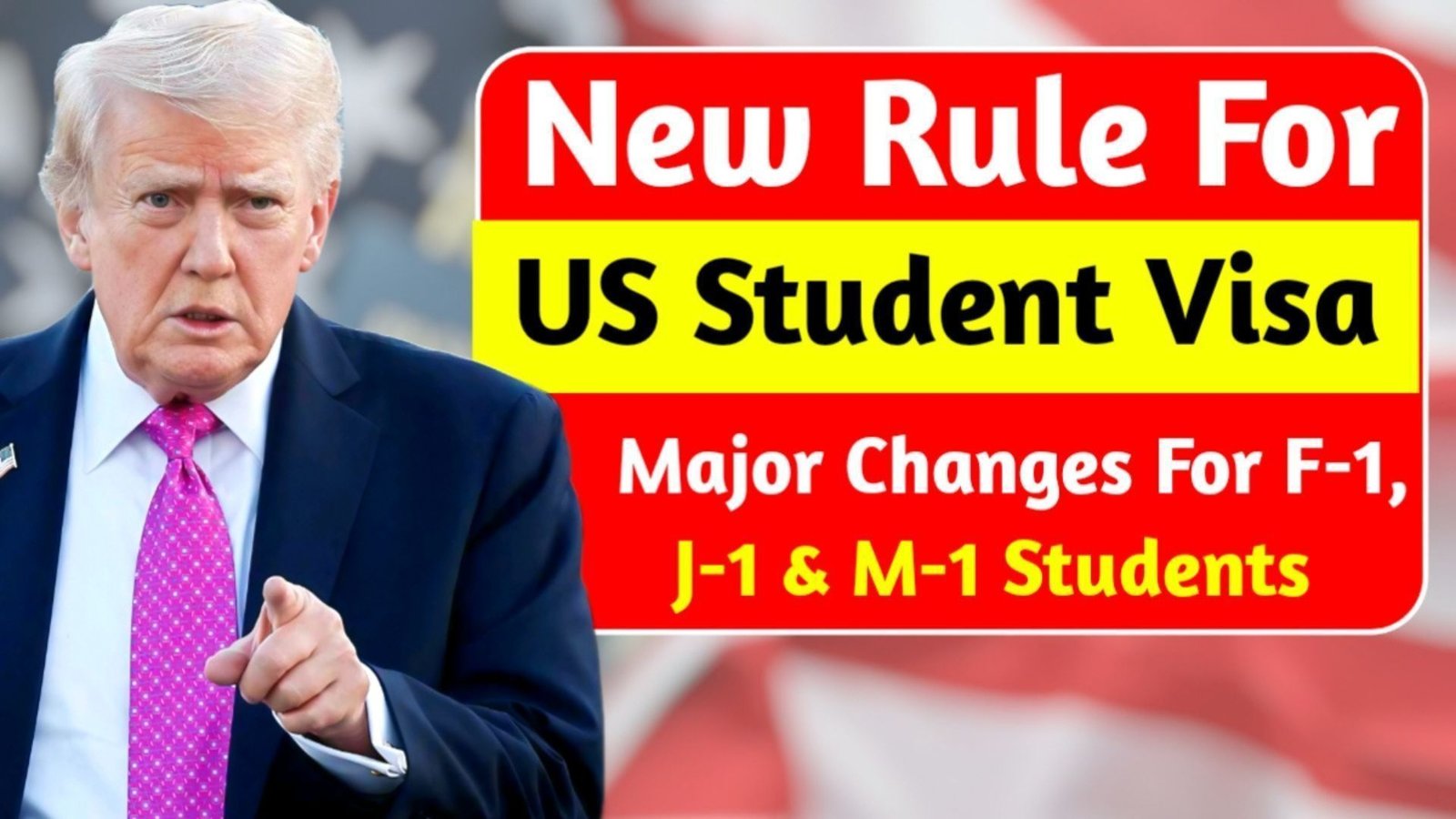
Imagine planning your dream U.S. degree only to hit a four-year wall— that’s the reality for thousands under President Trump’s latest immigration push. As of December 4, 2025, the Department of Homeland Security (DHS) has advanced a proposed rule capping F-1 visa updates 2025 stays at four years, ditching the flexible “duration of status” perk that’s defined student life for decades. This Trump student visa changes 2025 targets academic F-1 seekers, exchange J-1 visitors, and vocational M-1 trainees, aiming to curb “visa abuse” amid national security concerns. With public comments closed and finalization eyed for early 2026, international applicants from India to Iran face rushed timelines and stricter vetting—here’s your roadmap to navigate the shake-up.
What Are the New US Student Visa Rules?
These new US student visa rules stem from an August 2025 DHS proposal, revived from Trump’s first term and fast-tracked post-election. The core shift replaces indefinite stays with fixed periods: up to four years max for program-aligned enrollment, followed by mandatory extensions via U.S. Citizenship and Immigration Services (USCIS). Grace periods post-graduation shrink to 30 days for all categories, pressuring quick transitions to work visas like OPT or H-1B. Enhanced screening now includes social media reviews for every F, J, or M applicant, building on June 2025 travel bans affecting 19 countries. While not yet law, the rules signal a tighter grip on the 1.5 million international students contributing $45 billion annually to U.S. campuses.
Who Faces the Biggest Impact from These Changes?
The overhaul hits hardest those eyeing long-haul degrees or research—think PhD hopefuls on F-1 or extended J-1 scholars. J-1 visa policy changes add sponsor reporting mandates, while M-1 student visa reforms align caps to hands-on programs like culinary training. U.S. citizens and green card holders are untouched, but high-risk nationalities (e.g., China, Iran) see amplified scrutiny. Current holders get a one-year grace period to comply, but new applicants must prove financial stability and non-overstay intent upfront. Critics like NAFSA warn of enrollment drops—already down 17% this fall—potentially costing universities billions.
Basic Eligibility Under the New Caps
To qualify amid US F-1 J-1 M-1 visa limits: Hold a valid passport from a non-banned country. Secure program acceptance from a SEVP-approved school. Demonstrate ties to home and sufficient funds (no public aid). Pass expanded vetting, including online presence checks.
Income or Financial Thresholds for Approval
No strict income caps apply, but sponsorship proof is key—expect scrutiny on vague funding.
| Visa Type | Max Stay Limit | Grace Period Post-Program |
|---|---|---|
| F-1 (Academic) | 4 years | 30 days |
| J-1 (Exchange) | 4 years | 30 days |
| M-1 (Vocational) | 4 years | 30 days |
Exceeding four years? File USCIS extensions with “regular assessments”—delays could mean deportation risks.
Automatically Affected Groups
PhD candidates and researchers on F-1/J-1 face rushed completions. Au pairs and short-term J-1 exchanges get initial approvals slashed. Vocational M-1 trainees in tech/culinary lose flexibility for program switches. Students from 19 banned countries (e.g., Afghanistan, Yemen) hit outright entry halts.
When Do These Visa Changes Take Effect?
The proposal landed in the Federal Register August 27, 2025, with comments closing September 29—now in final review for Q1 2026 rollout. New visas enforce caps immediately upon approval, while existing ones grandfather in until extensions kick in. Travel bans paused interviews May-June 2025, spiking wait times to 200+ days in India. SEVIS terminations hit some F-1 holders in April but were reversed by May amid lawsuits. Track updates via USCIS alerts; spring 2026 applicants feel the first full wave.
Steps to Prepare for the New Rules Now
Don’t wait—bolster your application before international student visa overhaul locks in. Schedule DS-160 early via usvisas.state.gov, prioritizing non-banned consulates. Gather ironclad docs: I-20/DS-2019 forms, bank statements, and sponsor affidavits. For extensions, file Form I-539 with USCIS at least 45 days pre-expiry, budgeting $470 fees. Consult NAFSA.org for school advisors or immigration lawyers—avoid scams promising “fast tracks.” Backup plans? Eye Canada or EU options if U.S. doors narrow.
Why These Changes Are Sparking Global Debate
Proponents hail DHS student visa proposal 2025 as a “common-sense fix” against 2,100+ long-term overstays from 2000-2010, protecting U.S. jobs and security. Detractors, including Forbes and higher-ed lobbies, decry it as a brain-drain accelerator, echoing 2020’s H-1B freeze that tanked Indian arrivals by 50%. For students, it’s rushed OPT hunts and fractured families; for economies, lost tuition revenue. Yet, it spotlights real fraud—like misused CPT for cheap labor—pushing for balanced reforms over blanket bans.
FAQs – Trump Student Visa Changes 2025
- Are Trump student visa changes 2025 final yet? Proposed stage—expect Q1 2026 enforcement after DHS review.
- Do current F-1 holders need to leave after four years? No, one-year grace applies; extensions possible with USCIS approval.
- How do F-1 visa updates 2025 affect OPT work permits? Shorter stays tighten timelines, but OPT eligibility remains for grads.
- Which countries face J-1 visa policy changes bans? 19 total, including Iran, Somalia—check state.gov for exemptions.
- Can M-1 students appeal under M-1 student visa reforms? Yes, within 30 days via USCIS; legal aid boosts success rates.
Conclusion
As December 4, 2025, deadlines loom, Trump’s new US student visa rules reshape the American Dream for F-1, J-1, and M-1 aspirants—trading flexibility for oversight in a security-first era. While four-year caps and vetting hikes demand sharper planning, they’re not a full shutdown: proactive filings and backups keep doors ajar. Dive into DHS.gov or USCIS tools today, connect with advisors, and pivot if needed—your education’s too vital to stall. Stay resilient; global talent like yours drives innovation everywhere.