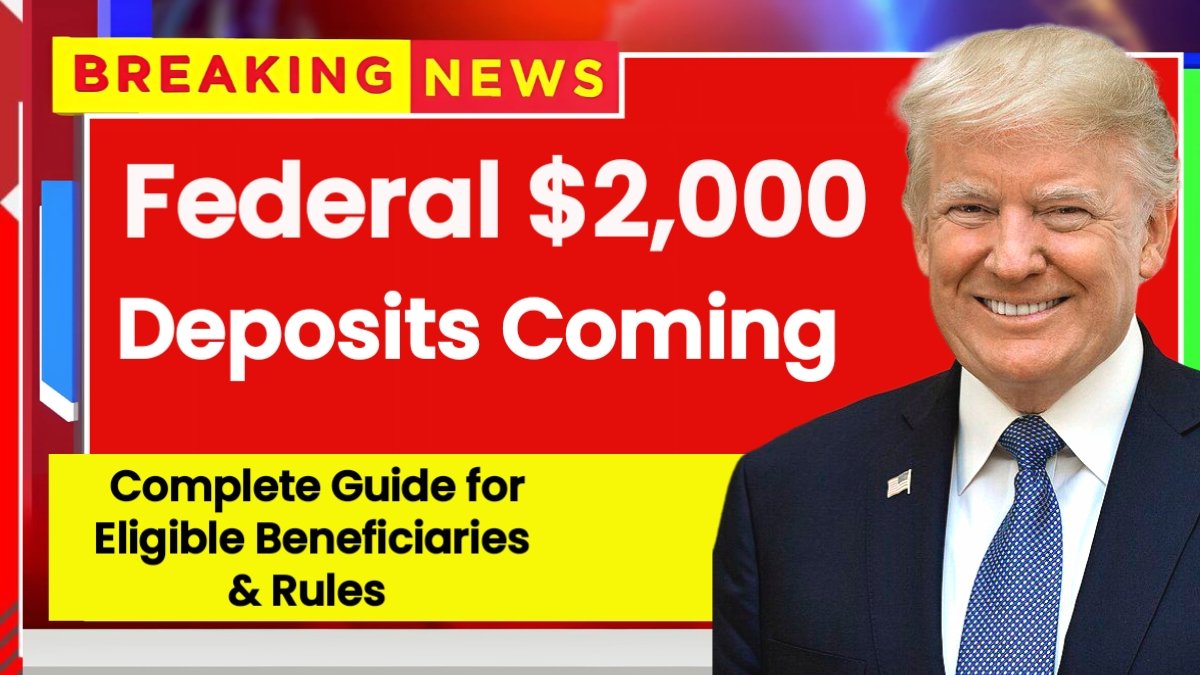
Federal $2,000 Deposits Coming in December 2025: The possibility of a Federal $2,000 deposit in December 2025 has captured nationwide attention in the United States. As living expenses continue to rise, families, seniors, workers, and veterans are eagerly watching policy discussions in Washington to see whether this relief support will finally receive approval. Although the proposal is still under review and not yet passed by Congress, the idea has moved into mainstream debate because it aims to offer short-term financial assistance during the costly holiday season. Many Americans are struggling to manage higher grocery bills, rent, medical costs, fuel expenses, and utilities, and a one-time Federal $2,000 payment could help ease month-end pressure.
The proposal has also gained momentum due to earlier federal assistance programs such as stimulus checks, which proved effective in stabilising household budgets during emergencies. Experts say the new program could follow similar models, especially for eligibility criteria and payment methods. For millions of people, the key question is whether the IRS and Congress can align quickly enough to roll out the deposits in December 2025. With public curiosity rising and online searches for “Federal $2,000 deposit” increasing, staying updated with authentic information has become essential for beneficiaries across income groups.
Why the Federal Government Is Considering a $2,000 Payment
The rising cost of essential goods has been one of the strongest reasons behind renewed talks about a federal relief payment. Over the past year, everyday items such as food, rent, household supplies, and healthcare have become significantly more expensive. Families living paycheck to paycheck are experiencing the greatest stress, especially seniors dependent on Social Security and individuals with disabilities relying on monthly support programs. According to lawmakers, a one-time Federal $2,000 deposit may help these groups stay afloat without resorting to high-interest borrowing.
Economists say the holiday period adds additional financial commitments for most households. With higher seasonal spending and outstanding bills, many people find it difficult to manage year-end costs. A short-term relief payment could stabilise consumer confidence and support local businesses. Earlier federal assistance programs showed that direct deposits tend to circulate quickly into the economy, offering a timely demand boost. For this reason, policymakers are reviewing the potential impact of a December 2025 rollout, keeping both economic conditions and budget availability in mind.
Expected Eligibility Rules for the $2,000 Federal Deposit
If the Federal $2,000 deposit receives approval, eligibility is likely to mirror previous federal relief structures. Individuals earning up to $75,000 annually may receive the full amount, while heads of household earning up to $112,500 could also qualify. Married couples filing jointly with income up to $150,000 are expected to be eligible for the complete benefit. Those slightly above these income brackets may receive reduced payments through a gradual phase-out formula. These limits are widely used because they target middle- and lower-income households more accurately.
Beneficiaries of federal programs such as Social Security, SSI, SSDI, and Veterans Affairs may receive payments automatically, as their income and identity information is already available with the IRS. However, individuals who did not file taxes in 2023 or 2024 may need to submit updated details through an IRS portal if the relief plan is implemented. Experts advise citizens to ensure their bank details, address, and identification records are accurate to avoid delays during processing. Past programs have shown that outdated information often results in returned or postponed payments.
How the IRS May Deliver the December 2025 Payment
Should Congress approve the program, the IRS is expected to rely heavily on direct deposit as the primary delivery method. This approach is faster, more secure, and streamlined for millions of Americans who already receive refunds or federal benefits electronically. During previous stimulus rounds, direct deposits reached many recipients within days of the distribution launch, reducing administrative burden and ensuring faster access to funds. Analysts believe the same model will likely be used for the proposed Federal $2,000 deposit.
For those without direct deposit details on file, the IRS may issue paper checks or prepaid debit cards. These methods, however, typically take longer because they involve printing, packaging, and postal delivery. Past experiences show that incorrect addresses and outdated bank accounts are common reasons for payment failures. In such cases, the IRS may reissue the amount, but the process can stretch toward the end of December or even into early 2026. Experts encourage citizens to update all financial and personal information on official portals once guidelines are released.
Possible Timeline for December 2025 Releases
The rollout timeline of the Federal $2,000 deposit will depend entirely on when Congress finalises its decision. If lawmakers approve the measure by mid-2025, internal preparations at the IRS may begin in late summer. September and October could see system testing, data verification, and coordination with partner agencies. If operations proceed without obstacles, direct deposits may reach eligible groups in the first or second week of December. This estimated schedule aligns with typical government release patterns during year-end relief cycles.
Paper checks and debit cards, if required, may be mailed by mid-December and continue until the end of the month. Reissued payments could stretch into late December due to postal delays or verification needs. It is important to note that these timelines are not official and should be treated as early projections based on standard IRS workflows. Citizens are encouraged to monitor clear, verified updates from the government rather than relying on viral social media claims or forwarded messages.
Important Steps to Avoid Scams and Misinformation
Whenever federal relief discussions gain momentum, scam activities also increase. Criminals often use messages, emails, or fake calls asking for bank account numbers, Social Security details, or login credentials. The IRS has repeatedly stated that it never contacts individuals through calls or texts to request personal information. Any communication demanding sensitive details in exchange for faster payment should be ignored and reported immediately.
To stay protected, citizens must follow official updates only through IRS.gov, SSA.gov, or trusted government portals. Relying on unverified social media posts or unofficial websites can lead to misinformation and financial risk. People are advised to avoid clicking suspicious links, sharing personal details, or responding to unsolicited communication. Staying informed and cautious is the best way to prepare for the potential December 2025 Federal $2,000 deposit.
Disclaimer
This article is based on current proposals, expert opinions, and publicly available information. The Federal $2,000 deposit for December 2025 has not been officially approved. Readers should verify all updates directly from government websites such as IRS.gov.